Chromosomes Involved and Gene LocusA gene mutation has been mapped to the short arm of chromosome 9 and might be involved in these familial cases.BRBNS is caused by somatic mutations in the TEK (TIE2) gene.
Type of Genetic Mutation That Causes BRBNS
Most cases of blue rubber bleb nevus syndrome are thought to occur by chance (sporadically).There have been a few cases of families with multiple family members affected with BRBNS. In these families, the condition appears to be inherited in an autosomal dominant manner. There is a genetic syndrome similar to blue rubber bleb nevus syndrome called familial venous malformation syndrome. This syndrome is caused by mutations (changes) in a gene called TEK.
|
|
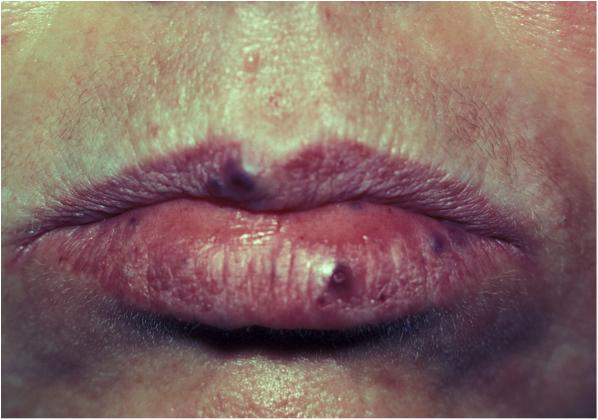
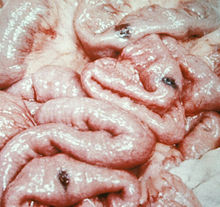
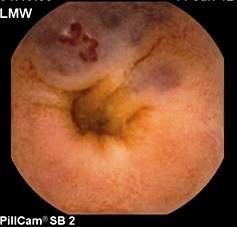
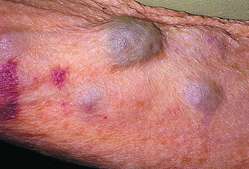
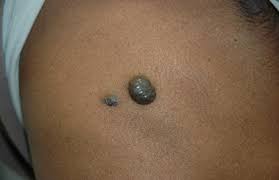
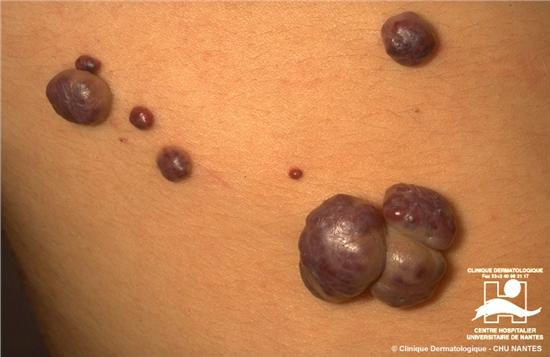
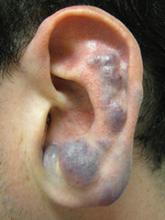
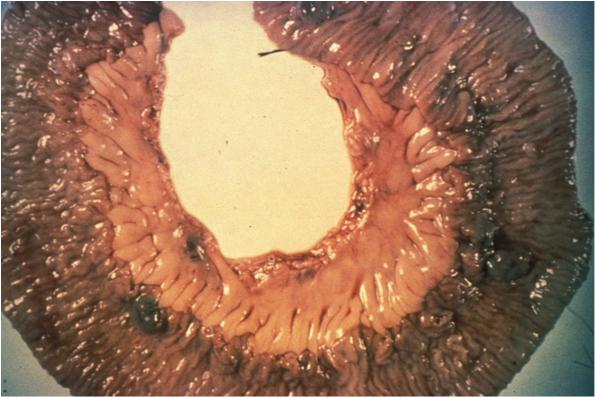
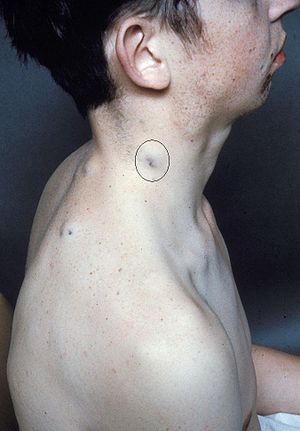
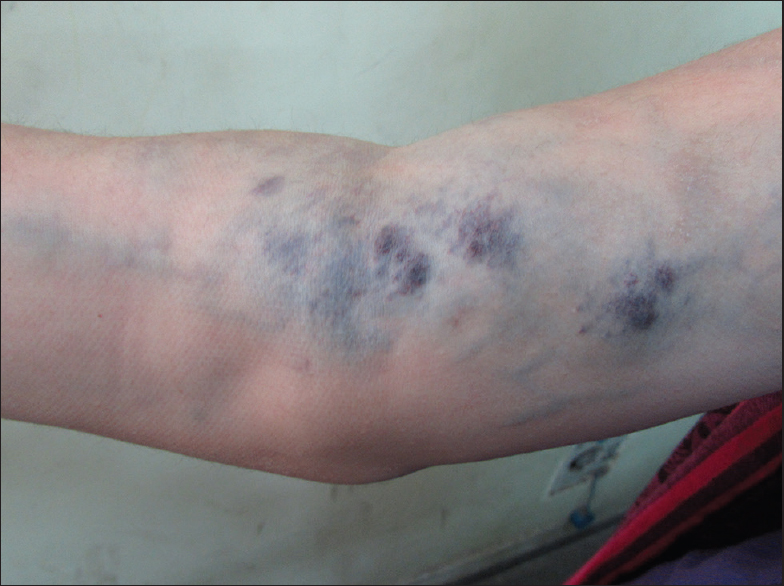
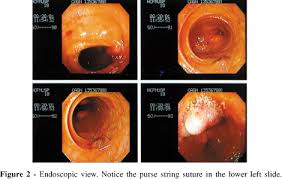
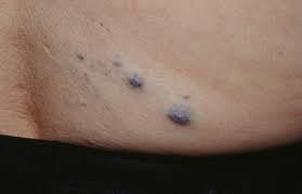
Symptoms
|
|
|
Treatment and Diagnosis of Blue Rubber Bleb Nevus Syndrome
BRBNS is diagnosed by physical examination and a procedure in which the GI tract is illuminated and visualized (endoscopy). Genetic testing for BRBNS is available on a research basis only.Iron therapy and blood transfusions are used to conservatively manage BRBNS. The skin lesions associated with BRBNS can be treated with laser therapy, injection of chemicals that collapse the lesion (sclerotherapy) or surgical removal. Lesions in the gastrointestinal system are usually not removed unless bleeding leads to anemia and necessitates repeated blood transfusions. Gastrointestinal lesions can be safely removed surgically, but one or several lengthy operations may be required.
Information about Support Groups for Individuals or Families of Individuals with BRBNS
Additional information resources on blue rubber bleb nevus syndrome can be found on the Office of Rare Diseases Research resource page on this syndrome at the following link: http://rarediseases.info.nih.gov/GARD/Disease.aspx?diseaseID=5940.To find a medical professional who specializes in genetics, you can ask your doctor for a referral or you can search for one yourself. Online directories are provided by GeneTests, the American College of Medical Genetics, and the National Society of Genetic Counselors. If you need additional help, contact a GARD Information Specialist. You can also learn more about genetic consultations from Genetics Home Reference.
